curated news excerpts & citations
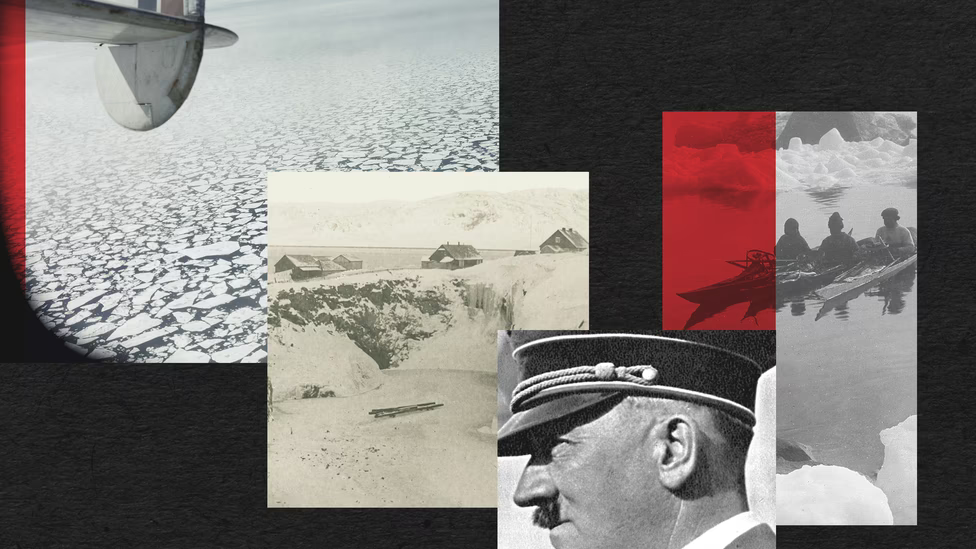
After creating an economic mess with ill-advised tariffs, Hitler looked north in pursuit of resources and national security.
Greenland appears to have been a lifelong preoccupation of Adolf Hitler’s. According to stenographic notes from a lunchtime conversation dated May 21, 1942, Hitler recalled that hardly anyone “interested him more in his youth” than Fridtjof Nansen, the Norwegian explorer who in 1888 led the first team to cross Greenland’s interior. …
By April 1934, Hitler’s government had inventoried Greenland: 13,500 Eskimos, 3,500 Danes, and 8,000 sheep, as well as the world’s largest deposit of a strategic natural resource—cryolite, a mineral essential to American aluminum production. In 1938, Hermann Göring dispatched an expedition to Greenland, ostensibly to explore the island’s flora and fauna. However, Hitler’s true intent may have been not scientific, but economic—the expedition was headed by a mining engineer, Kurt Herdemerten, who had been a member of the ill-fated Wegener expedition. Hitler had inflicted countless economic wounds on his country over his five years as chancellor, and this foray into the Arctic was part of a broader effort to remedy one of them.
In a drive to move Germany toward economic self-sufficiency, Hitler had imposed draconian tariffs, refused to honor foreign-debt obligations, and sought to wean the nation off Norwegian whale-oil consumption. The problem was that Germany used whale oil not only for margarine, a staple of the German diet, but also in the production of nitroglycerin, a key component for the munitions industry. …
(more…)