[about these posts]

  • Yesterday’s News 2026 04 02

    curated news excerpts & citations

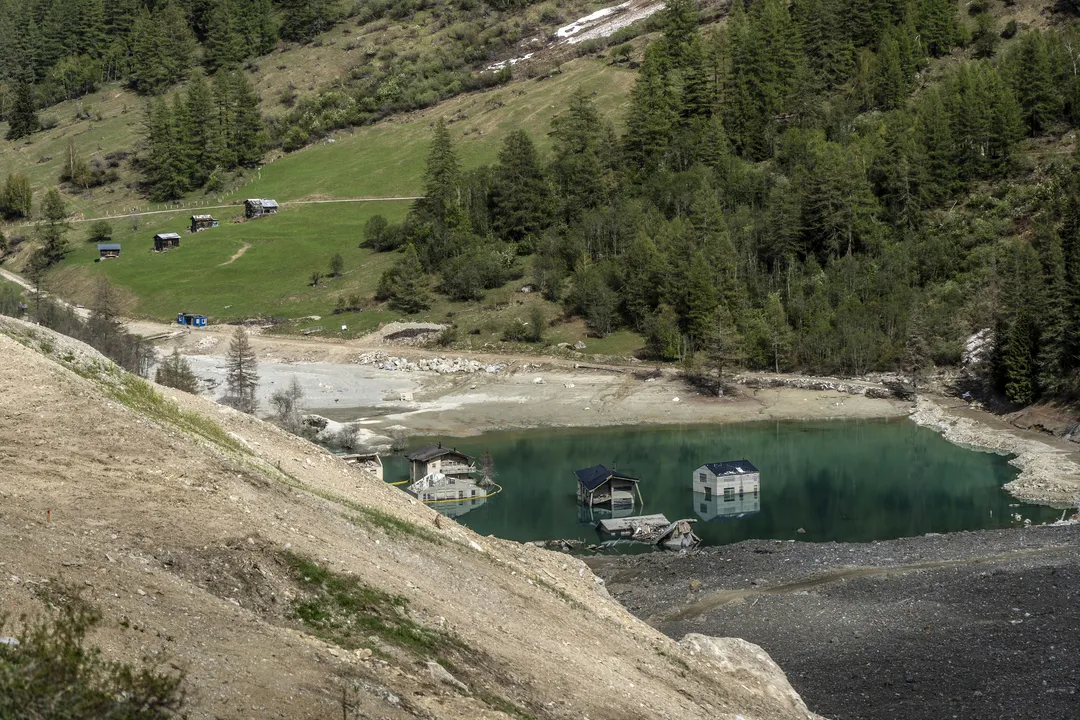
    Glacial lakes 2020

    Tripti Lahiri, Krishna Pokharel and Emma Brown @ WSJ: How a Tsunami Was Unleashed at 17,000 Feet, Shattering Lives Below

    RANGPO FOREST VILLAGE, India—Far from human eyes, nestled in the Himalayas at 17,000 feet, the South Lhonak Lake was growing. Late one night in October 2023, part of the shelf of rocks and ice that dammed the lake in northeast India collapsed.

    What followed was part-tsunami, part-landslide.

    The water that poured out of the lake picked up stones, sand and other sediment as it flowed through the rocky mountain channels, triggering a series of landslides along the way. In one town, the slurry knocked out a hydropower project, adding even more water to the deluge as it joined the Teesta, a Himalayan river known for its sinewy twists and turns.

    Sometime after 2 a.m., Dharmendra Prasad, a 37-year-old taxi driver living far below the lake in the town of Rangpo Forest, awoke to a commotion, as townspeople desperately scrambled to get to higher ground.

    Prasad bundled his 23-year-old wife, Priyanka Devi, who was due to deliver their second child, and his 5-year-old son, into his SUV. He then went to get his father, but couldn’t find him. He ran back to the car, but as he was about to jump in a wave of water hit him and he fell.

    “When I looked around, neither my car nor my wife and child were there,” he said. “Somehow I managed to get out of the water and was shouting, ‘Save us, save us.’ But at the time, everyone was busy trying to save their own families.”

    Shanti Rai, 45, runs a volunteer rescue group that helped save people stuck on rooftops and clinging to trees, and pulled bodies from the Teesta.

    “I used to wonder where tears come from endlessly when we are sad,” said Rai, sitting at the riverside restaurant she built on the highway to Rangpo. “Looking at the river, I wondered: ‘Where is so much water coming from? Where in the mountains is there so much water?’”

    As warmer global temperatures melt polar ice, ocean waters are rising, posing a threat to island nations and coastal communities. A parallel danger lurks in the Himalayas and other high mountain areas like the Andes, where melting glaciers have created thousands of new lakes.
    (more…)

  • Yesterday’s News 2026 04 01

    curated news excerpts & citations

    Smoke rising from a fire in the U.A.E. caused by debris after a drone was intercepted in early March. Amr Alfiky/Reuters

    Summer Said, David S. Cloud and Michael Amon @ WSJ: U.A.E. Wants to Force Hormuz Open and Is Willing to Join the Fight

    Gulf state begins effort to persuade U.S. and others to open waterway by any means necessary

    The United Arab Emirates is preparing to help the U.S. and other allies open the Strait of Hormuz by force, Arab officials said, a move that would make it the first Persian Gulf country to become a combatant, after being hit by Iranian attacks.

    The U.A.E. is lobbying for a United Nations Security Council resolution that would authorize such action, the officials said. Emirati diplomats have urged the U.S. and military powers in Europe and Asia to form a coalition to open the strait by force, a U.A.E official said, adding that the Iranian regime thinks it is fighting for its existence and is willing to bring the global economy down with it in a chokehold on the strait.

    The U.A.E. official said the country was actively reviewing how it could play a military role in securing the strait, including efforts to help clear it of mines and other support services.

    The Gulf state has also said the U.S. should occupy islands in the strategic waterway including Abu Musa, which has been held by Iran for a half-century and is claimed by the U.A.E., some of the Arab officials said.
    (more…)

  • Yesterday’s News 2026 03 31

    curated news excerpts & citations

    Iranian-airstrikes-Israel

    Jennifer Kavanagh @ Responsible Statecraft: Iran wipes out US-Israeli radars & sensors, changing course of war

    This might be an answer to the biggest question today: why does the airspace suddenly seems penetrable, even against a wounded Tehran military?

    A month into the U.S. military campaign against Iran, Israel’s vaunted air defense system is showing its limits. Just in the past 10 days, major cities including Tel Aviv, Dimona, and Arad sustained significant damage when Iranian missiles successfully evaded Israel’s network of interceptors.

    The most obvious explanation for the apparent failures is that depletion of Israel’s interceptor stockpiles is forcing the Israel Defense Forces to ration munitions or prioritize targets. But the faults in Israel’s air defenses almost certainly have deeper roots. After all, even if forced to defend only the most important locations, Israel would almost certainly place Dimona — a city located near several of Israel’s key nuclear facilities — at the top of the list.

    The more worrisome reality is that gaps in Israel’s air defenses may be detection (rather than interception) failures resulting from damage to the radars and sensors that underlie the integrated air defense network shared by the United States, Israel, and Gulf partners. If true, the implications would be dire. Operating without the “eyes” that the American military relies on to identify and mitigate threats, U.S. forces and assets would be much more vulnerable than previously understood.
    (more…)

  • Yesterday’s News 2026 03 30

    curated news excerpts & citations

    Oil rents as share of GDP

    Paul Krugman: Is America Suffering from the “Resource Curse”?

    Why the U.S. is the “last big petrostate” and why that’s bad for everyone
    … David Roberts declared that “the US is basically aligning itself as the last big petrostate. We’re going to go down with the fossil fuel ship, and China is aligning itself as the first electrostate.”

    Last month Rana Faroohar of the Financial Times basically said the same thing.

    At this moment in history critiques of economic reliance on fossil fuels often focus on changing energy technology. At a time of rapid progress in renewable energy and general economic electrification, many argue, as Roberts does, that clinging to fossil fuels means missing the boat.

    However, warnings that reliance on oil or other natural resources can be a trap have been prominent in economic discourse for decades. They were widespread long before the current renewable energy revolution began and were largely separate from concerns about the environment. The term resource curse, coined by Richard Auty in 1993, refers to a familiar though controversial proposition in development economics. It says that nations rich in natural resources, especially minerals including oil, tend to do worse in the long run than resource-poor nations. As we will see, the resource curse proposition claims that countries with economies heavily tilted towards natural resource extraction are afflicted by a tendency towards backwardness compared to countries less dependent on natural resource extraction.

    Historically, most discussion of the resource curse has been concerned with small or poor nations. At this point, however, many are arguing that the United States faces some of the same issues and that our success in extracting oil and gas is actually hurting us.
    (more…)

  • Yesterday’s News 2026 03 29

    curated news excerpts & citations

    Houthi forces march in the Red Sea port city of Hodeidah

    Robert Sherman @ NewsNation: War in Iran marks one month as Yemeni Houthis join the fighting

    The U.S. and Iran have each submitted cease-fire terms as Saturday marks the start of the fifth week of fighting in the war in Iran.

    Overnight, at least 15 U.S. service members were wounded following an Iranian missile attack at a base in Saudi Arabia, according to the Associated Press.

    President Donald Trump has announced he is extending his self-imposed deadline for Tehran to reopen the Strait of Hormuz.

    Iran publicly rejected the U.S.’s 15-point peace plan, sending a counterproposal that calls for Iranian sovereignty over the Strait of Hormuz, an end to hostilities and a stop to attacks on government officials.

    Meanwhile, missile attacks from Yemen are now targeting Israel.
    (more…)

  • Yesterday’s News 2026 03 28

    curated news excerpts & citations

    The Three Mile Island Nuclear Plant is seen on September 21, 2024 from across the river in Etters, Pennsylvania. (Photo by Matthew Hatcher/Getty Images)

    Jill Lawrence @ Bulwark: DOGE Targeting Nuclear Safety Brings Back Memories of Three Mile Island

    I WAS ASKED A FEW YEARS AGO to name the biggest story I’d ever covered as a journalist. “You’d think Three Mile Island would have been the major story of my career, but history has just kept happening,” I replied.

    Yet even after the deadlocked 2000 election, the inauguration of the first black U.S. president, the rise of Donald Trump, and so many other huge stories, that nuclear power plant accident on March 28, 1979, is still in the running for number one. And as I periodically rediscover, it still has the power to haunt.

    That’s what happened last week, when ProPublica published an article by Avi Asher-Schapiro headlined “DOGE Goes Nuclear: How Trump Invited Silicon Valley Into America’s Nuclear Power Regulator.” The gist: Young, unqualified, and deeply unserious DOGEbros are “forcing a ‘move fast and break things’ Silicon Valley ethos on one of the country’s most important regulators.”

    “The safety culture is under threat,” Allison Macfarlane, a former chair of that regulator, the Nuclear Regulatory Commission, told ProPublica. That was admirably restrained. This is a chilling investigatory account of corruption, cronyism, and lack of care.
    (more…)

  • Yesterday’s News 2026 03 27

    curated news excerpts & citations

    Christopher Katsarov — The Canadian Press via Associated Press

    Qasim Rashid, Esq.: 13 Rules to Protect Yourself While Protesting At No Kings

    This week the “No Kings” Protest is projected to be one of the largest protests in American history. The right to protest is enshrined in the Bill of Rights. Americans have exercised this right throughout our nation’s history to protest government overreach, tyranny, and injustice. Today, that right is once again being tested.

    Across the country, working people are mobilizing to protest ICE raids, mass arrests, and the targeting of immigrants, Muslims, Indigenous, and Black and brown communities. Meanwhile, the Trump regime has made clear it does not respect the right to peaceful protest.

    That reality means preparation matters. Whether you are protesting this week, next week, or supporting loved ones who are, the goal is the same: protect yourself, protect each other, and remain rooted in principle. Below are key rules I urge you to read, share, and keep with you as we continue to show up for our communities.
    (more…)

  • Yesterday’s News 2026 03 26

    curated news excerpts & citations

    Trump on Wall Street

    Robert Reich: Trump’s Graft, Insider’s Grift

    Margaret Ryan, the top enforcement official at the Securities and Exchange Commission — the agency tasked with investigating insider trading and other illegal activities in financial markets — abruptly resigned last week, after just six months on the job.

    Reportedly, Ryan wanted to be more aggressive in pursuing charges of fraud and other misconduct, including against Trump’s inner circle. But the SEC’s chairman, Paul Atkins, and other Republican appointees to the commission wouldn’t let her.

    When Trump appointed Atkins chair of the SEC, he was co-chair of the Token Alliance, a cryptocurrency advocacy group, and he owned $6 million worth of holdings in crypto-related businesses.

    During Atkins’s time at the SEC, the commission has dropped or settled numerous lawsuits with cryptocurrency companies and adopted a lax regulatory approach to fraud.

    It’s also avoided politically sensitive cases — such as, let me hazard a guess, insider trading by Trump’s family and cronies.

    Why do I mention insider trading by Trump’s family and cronies?
    (more…)

  • Yesterday’s News 2026 03 25

    curated news excerpts & citations

    no off ramp

    Jennifer Rubin: There is no smooth ‘off-ramp’

    The notion that Donald Trump could depart from the highway to forever-war simply by spotting the next exit is misleading at best, dangerously naïve at worst. It is not as if Trump is speeding along the 405 freeway on the Westside of Los Angeles, deciding if he should take the Wilshire Blvd. off-ramp or wait for Santa Monica Blvd. The current situation is more akin to going over Niagara Falls in a barrel he chose to get into. The “exit” was there before Trump got in. Put differently, we need to stop using a metaphor that implies Trump is still in control of the war’s timeline. He’s not.

    In the space of 24 hours, Trump went from threatening to knock out Iran’s power plants to insisting that the U.S. was engaged in “constructive” talks with Iran. He therefore put the “destroy the power plants” on hold for 5 days. While Trump may have simply lied (as is his way) about talks to excuse delaying an ill-conceived major escalation, his latest announcement underscores just how frantic he is to get out of this debacle.

    However, Trump cannot simply “leave” now that he is sick of the collapsing polls, public ridicule, rotten press coverage, absurdly high oil prices, aggrieved allies, and whiny MAGA isolationists. …
    (more…)

  • Yesterday’s News 2026 03 24

    curated news excerpts & citations

    ships on fire

    James Eagle: When an oil chokepoint stops the world

    War has a way of cutting through economic narratives.

    For months, markets have been telling a comfortable story. Energy shocks were behind us. Supply chains had adapted. Prices had settled. But that story only holds in peacetime, or something close to it.

    The escalation in the Middle East changes the frame entirely. The sudden halt in traffic through the Strait of Hormuz is not a market adjustment, it is a wartime constraint. When a critical artery for global oil and gas effectively shuts, the system does not bend, it snaps.


    Tanker traffic in Strait of Hormuz

    (more…)