curated news excerpts & citations
… trying to ‘unbury the lede’
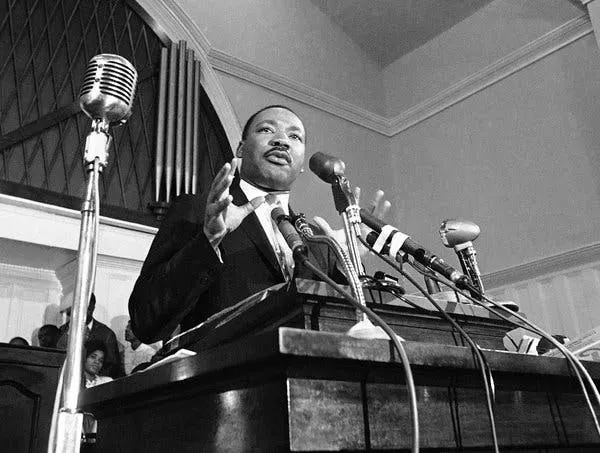
Qasim Rashid, Esq.: Why Did Dr. King Say White Moderates Are Worse Than The KKK?
On April 12, 1963—Good Friday—the Reverend Dr. Martin Luther King Jr. was arrested and jailed in Birmingham, Alabama.
His “crime” was organizing peaceful, nonviolent protests, marches, and sit-ins against the brutality of legalized segregation. He was not throwing bricks. He was not inciting violence. He was doing precisely what every civics textbook tells us citizens we are supposed to do: peacefully assemble and demand that the government live up to its own stated values.
For that, Dr. King was locked in a cell.
He was finally bailed out eight days later—on April 20th—by the United Auto Workers, who posted $160,000 bail. In those eight days, confined to a Birmingham jail cell, Dr. King wrote one of the most important documents in American history.
Every person committed to justice should read it in full. But today, I want to focus on the passage that cuts most deeply—because it was not written about the Klan. It was written about the people who, while claiming to be on Dr. King’s side, were his greatest stumbling block.
Dr. King wrote:
I must confess that over the past few years I have been gravely disappointed with the white moderate. I have almost reached the regrettable conclusion that the Negro’s great stumbling block in his stride toward freedom is not the White Citizen’s Counciler or the Ku Klux Klanner, but the white moderate, who is more devoted to ‘order’ than to justice; who prefers a negative peace which is the absence of tension to a positive peace which is the presence of justice; who constantly says: ‘I agree with you in the goal you seek, but I cannot agree with your methods of direct action’; who paternalistically believes he can set the timetable for another man’s freedom; who lives by a mythical concept of time and who constantly advises the Negro to wait for a more convenient season. Shallow understanding from people of good will is more frustrating than absolute misunderstanding from people of ill will. Lukewarm acceptance is much more bewildering than outright rejection.
Read those words again. Slowly. Because Dr. King was not describing the enemy. He was describing the ally who refuses to act like one. He was describing the person who agrees with the goal but objects to the urgency. Who believes in justice in theory but demands cowardly patience in practice. Who is more committed to maintaining the comfort of the powerful than to delivering the rights of the powerless.
(Qasim Rashid, Esq. more…)
-
Heather Cox Richardson: Letters from an American – June 3, 2026
Last night, in an unsigned opinion, the U.S. Supreme Court expanded its finding in the recent Louisiana v. Callais decision. That decision overturned decades of law to declare that states could not construct majority-minority voting districts, as they had done under Section 2 of the 1965 Voting Rights Act to ensure Black voters had the opportunity to elect members of Congress who would represent the interests of the Black community.
…And so, Alabama will likely replace a Black Democratic lawmaker with a white Republican, using a map that previous courts have said violates the Fourteenth Amendment to the Constitution.
Republican lawmakers currently in power appear to be trying to grab as much power as they can as President Donald J. Trump deteriorates both personally and politically.
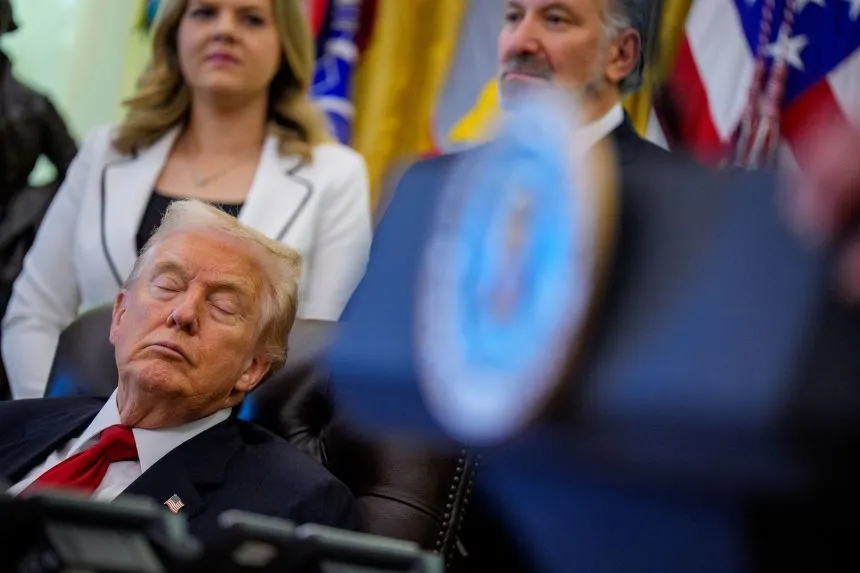
…In the House of Representatives, where Secretary of State Marco Rubio was testifying before the Foreign Relations Committee about Trump’s 2027 budget requests for the State Department, Representative Ted Lieu (D-CA) played a video of Trump sleeping in two Cabinet meetings as Rubio was talking, and asked how the president could make good decisions about war if he couldn’t stay awake even during public events.
Rubio insisted he had never seen Trump asleep in a meeting, although in the instances Lieu showed, the president was sleeping in a chair directly beside him. Lieu accused Rubio of lying to Congress.
The weekend’s promises of an end to the war on Iran have fizzled, and the economy is slowing under the pressure of higher oil prices. …
(Heather Cox Richardson more…)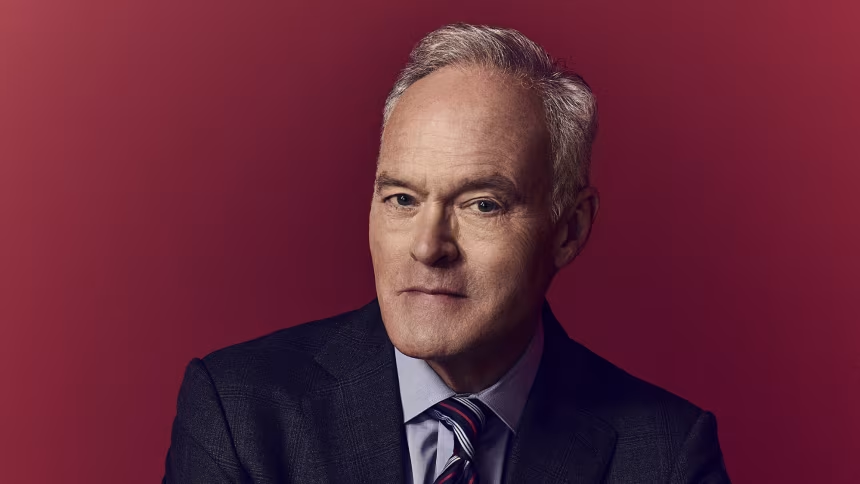
-
Brian Stelter @ CNN: Scott Pelley fired by CBS after ‘60 Minutes’ clash with management
…
CBS News editor in chief Bari Weiss said Wednesday that her leadership team had tried to reconcile with Pelley, but “we weren’t able to do so.” The correspondent said that wasn’t true, reaffirming that he will not go quietly from the network where he worked for 37 years.Siladitya Ray, Zachary Folk @ Forbes: Scott Pelley Calls Bari Weiss ‘Disingenuous’ After She Defended Firing ‘60 Minutes’ Journalist
Miles Taylor: “What would Scott Pelley do?” That’s the question all reporters should be asking.
Borowitz: Bari Weiss Exits CBS to Run North Korean State Media

-
Katherine Blunt @ WSJ: America’s Data Center Build-Out Is Falling Way Behind Schedule
…
Google and other tech giants in recent months have announced significant upward revisions to their capital-expenditure forecasts as the AI race necessitates the frantic construction of hangar-sized buildings packed with servers, networking hardware and cooling systems. Microsoft, Alphabet, Meta Platforms and Amazon last year collectively devoted $410 billion to capex and are expected to spend more than $670 billion this year.
(Katherine Blunt @ WSJ more…)Daniel Nishball et al @ SemiAnalysis: To Boldly Go: The Case for Space Datacenters
…
Many of these points sound like they hold merit on the surface, but a deeper analysis of each apparent advantage reveals a far more complex story.
-
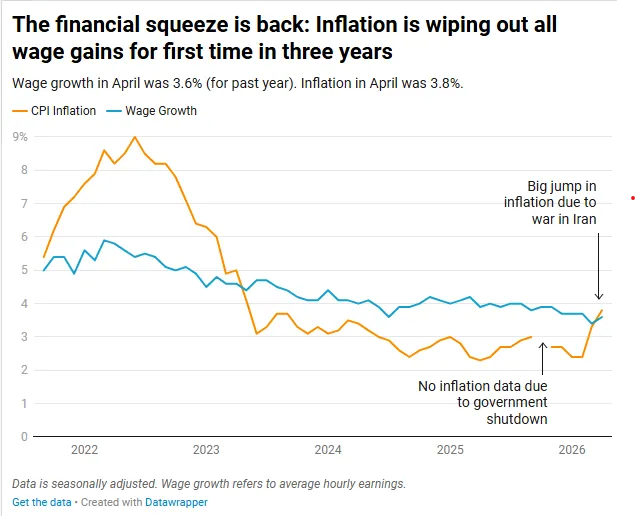
James Eagle: US workers are getting raises that inflation eats
(James Eagle more…)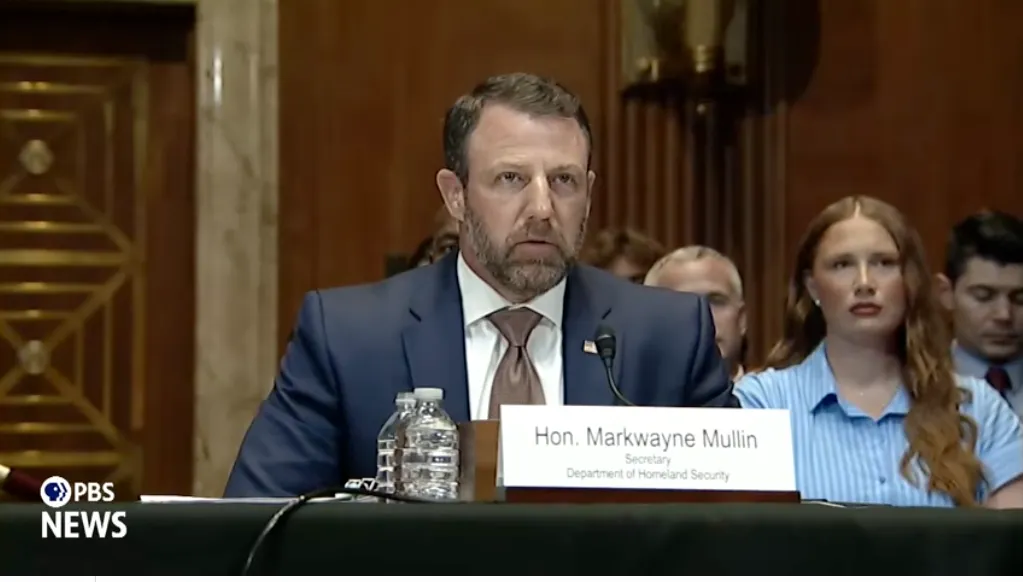
-
Heather Delaney Reese: This could lead to the end of our republic
At 3:23 this afternoon, sitting before the Senate Appropriations Committee for the first time since taking over as Secretary of Homeland Security, Kristi Noem’s replacement was asked a simple question: Would he follow court orders? He refused to say yes.
Heather Delaney Reese: ICE violated 96 court orders in 1 month, in 1 state alone
-
Paul Krugman: Trump Has Given Up
No longer interested in governing, he is filled with rage and obsessed with revenge
(Paul Krugman more…)Dean Blundell: “I Really Don’t Care. I Couldn’t Care Less.” — Iran Just Bombed A Civilian Airport/US interests, And That’s What The President Said.
Greg Sargent @ TNR: Trump Push to Jail Foes Takes Darker Turn—and GOP Senators Are Rattled
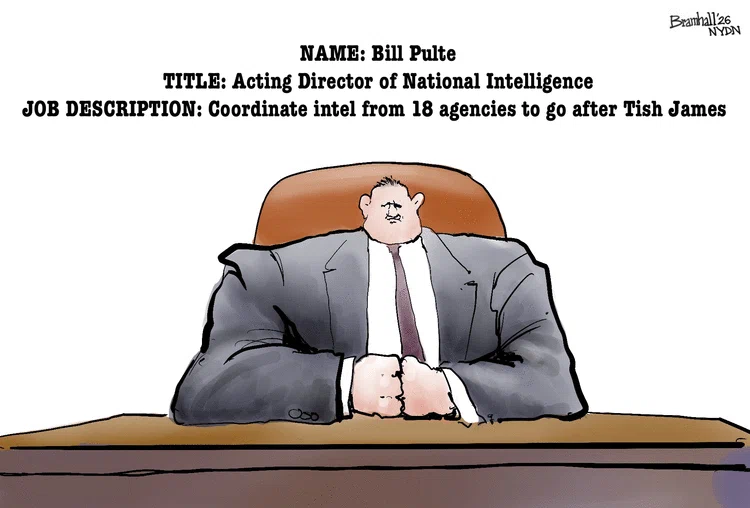
Joyce Vance: If You Thought Tulsi Gabbard Was A Problem…
Jordan Heller @ TNR: How Trump Made Penn Quake in Its Boots
Fearful of being labeled antisemitic, the University of Pennsylvania has acquiesced to the demands of a punitive Trump administration and vindictive donors—and it’s chilling speech both inside and outside the classroom.
Brockovich AI Data Center Reporting
resources tracking the “Andes” hantavirus outbreak
Apocalypse Early Warning System
Al Jazeera Death toll and injuries live tracker
ICE Accountability Project
Sergio Martínez-Beltrán, Ximena Bustillo, Jasmine Garsd @ NPR: Deaths of migrants in ICE custody hit record high under Trump
- April 16: Aled Damien Carbonell-Betancourt
- March 25: Jose Guadalupe Ramos-Solano
- March 16: Royer Perez-Jimenez
- March 14: Naseer Paktiawil
- February 25: Nurul Amin Shah Alam
April 1 – Jennifer Peltz and Jake Offenhartz @ AP: Death of a refugee left at a Buffalo doughnut shop by Border Patrol is ruled a homicide - January 24: Alex Pretti
- January 14: Heber Sanchaz Dominguez
- January 14: Victor Manuel Diaz
- January 9: Parady La
- January 7: Renée Good
- January 6: Luis Beltran Yanez-Cruz
- January 5: Luis Gustavo Nunez Caceres
- January 3: Geraldo Lunas Campos
- December 31, 2025: Keith Porter
Suffering Under President Obama
NACDL Criminal Case Tracker
Texas Tribune: A Walk for Peace: photos of Fort Worth monks’ journey to Washington
Walk for Peace – Dhammacetiya – The Ancient Sacred Buddhist Scripture Stupas
Margaret Chase Smith: Declaration of Conscience
NPR: January 6, 2021: A visual archive
Accountability Initiative ICE List
GriftMatrix
Trump Action Tracker
Timeline: Tracking the Trump Justice Department’s Anti-Voting Shift
Tracking the Lawsuits Against Trump’s Agenda
Trump Pardons Database
Project 2025 Tracker
DOGE Tracker
ProPublica: Elon Musk’s Demolition Crew
Wired: 6 Tools for Tracking the Trump Administration’s Attacks on Civil Liberties