curated news excerpts & citations
… trying to ‘unbury the lede’
Broad Daylight News:
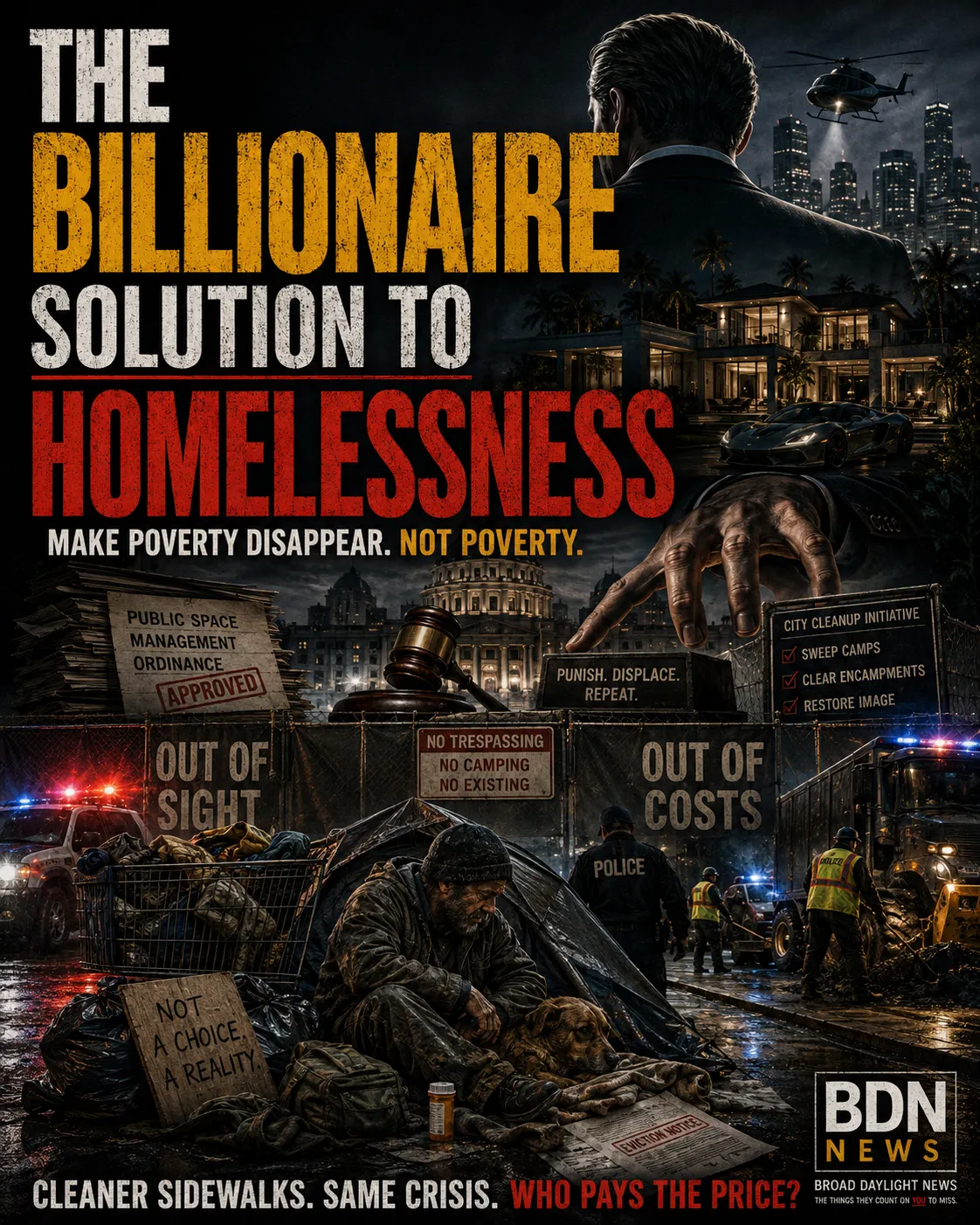
When making poverty disappear from view becomes easier than making poverty disappear
Joe Lonsdale is worth roughly $3.5 billion. He co-founded Palantir, built several other tech companies, runs the venture firm 8VC, and moves through a world of senators, cabinet officials and fellow billionaires like it’s his living room. A few years back, according to a Washington Post investigation, his wife came home shaken after she and their toddler were confronted by homeless people while walking through downtown San Francisco. Lonsdale was already furious about California before that happened. He hated the homelessness. He hated the politics. He complained that his own household staff had to commute over an hour just to reach his estate in Woodside because zoning had made housing too expensive nearby. So he left for Texas.
But he did something bigger than change his address. He built a machine to change public policy nationwide.
The Cicero Institute, the think tank Lonsdale founded, has spent years writing model legislation and lobbying states to fundamentally rethink how America treats homelessness. The prescription is simple to describe: ban unauthorized street camping, pull money away from permanent supportive housing, expand temporary shelters and sanctioned encampments, make involuntary psychiatric commitment easier, and use police and the threat of jail to push people off the sidewalk and into shelter or treatment. Cicero calls this compassionate, and the argument deserves to be taken seriously rather than dismissed outright. Nobody should romanticize tent encampments. People living outside face violence, exploitation, overdose, untreated psychosis and premature death, and residents and business owners have a legitimate claim to safe sidewalks and parks too. For some people whose mental illness has become severe enough, handing them a phone number for voluntary treatment genuinely isn’t adequate.
But before letting one billionaire’s preferred fix become the law of the land, it’s worth asking what we’re actually buying, and not just in dollars. Police time. Courtrooms. Jail beds. Psychiatric beds. Emergency rooms. Lost belongings. Criminal records. And then the harder question: who actually benefits from the purchase?
(Broad Daylight News more…)
-
Mike Ludwig @ Truthout:
Advocates asked a court to unseal more details on Trump’s surveillance of churches, schools, and libraries in Minnesota.Free speech groups across the country are sounding the alarm over the Trump administration’s surveillance of social movements in Minnesota and the prosecution of the Minnesota 15, a group of activists from Minneapolis-St. Paul who face federal conspiracy charges after organizing protests against brutal immigration sweeps earlier this year.
(Mike Ludwig @ Truthout more…)
-
Paul Offit:
Did a newborn infant in Lancaster County die from measles?… We know that this infant was infected with measles while in the womb; we know that the infant died of splenic rupture; we know that measles infections can increase splenic fragility leading to rupture; and we know that splenic rupture is extraordinarily rare in newborns. It’s understandable that Dr. Diamantoni is cautious about determining why this child died of splenic rupture given its rarity. Nonetheless, if Dr. Diamantoni is going to claim that measles wasn’t the precipitating cause of this child’s death, he is going to have to do a much better job of explaining why it wasn’t.
(Paul Offit more…)
-
Liz Dye @ Above the Law:
Don’t you hate it when you file so many trollsuits that you wind up contradicting yourself in court?…
Either the returns were real, in which case the Times had every reason to rely on them. Or they weren’t, and Trump and Brito just filed a fraudulent lawsuit against the IRS that led to the creation of the January 6 slush fund and blanket immunity for past tax crimes for Trump and his family. If the documents were fake, then the settlement must be invalid, right?
(Liz Dye @ Above the Law more…)
-
Zahra Hirji @ Bloomberg:
Heat’s lasting toll

… we discovered is that no two recoveries from heat stroke are the same, and sometimes the impacts are long-lasting.Take Rebecca Ochoa. When she was 13 years old, she experienced heat stroke while trying out for her high school volleyball team in the August heat in Texas. It wreaked havoc on her body: She developed a severe related condition called rhabdomyolysis, which involves muscle breakdown. Doctors were concerned about possible kidney damage. She was hospitalized for about two weeks.
That was 11 years ago. “I am still not the same as before this happened, physically or mentally,” Ochoa says. “I constantly battle dehydration, fatigue, nosebleeds, and even passing out during the warmer months.” She never returned to volleyball.
(Zahra Hirji @ Bloomberg more…)
-
Emily Atkin:
Revisiting a 2021 call to action in the wake of the Nepal-Tibet floods.

(Emily Atkin more…)
-
Heather Cox Richardson:
Letters from an American – August 29, 2026On Thursday, August 27, Tolouse Olorunnipa reported on the attempts of Republican lawmakers to restrict the ability of naturalized and dual citizens to run for office. In several states, Republican lawmakers have introduced measures to cut those Americans out of candidacy for elected positions, while in Congress, at least five Republicans have called for prohibiting them from federal judgeships, Cabinet posts, ambassadorships, and congressional seats.
The push has come in the wake of the rise of New York City mayor Zohran Mamdani and other naturalized U.S. citizens whose policy positions those like South Carolina representative Nancy Mace consider un-American. These policies are, of course, the ones voters elected people like Mamdani to put into place. In her comments to Olorunnipa, Mace said: “This isn’t personal. It’s about what standard we want for the people entrusted with enormous power over the American people.”
Her word choice was revealing. Our elected officials are entrusted with the enormous power of the American people, not over them.
In the 1850s, Americans struggled over the question of equality and immigration …
…Karlan summed up the idea of discriminating against naturalized citizens, telling Olorunnipa it is “just incredibly ugly, stupid, and unconstitutional.”
(Heather Cox Richardson more…)

Last Days in Two Nations
Climate.us
formerly Climate.gov
Climate Solutions Explorer
Have I Been Flocked?
Brockovich AI Data Center Reporting
resources tracking the “Andes” hantavirus outbreak
Apocalypse Early Warning System
Al Jazeera Death toll and injuries live tracker
Mike Ludwig @ truthout: ICE Says 51 People Died in Custody Under Trump. Experts Say That’s an Undercount.
ICE Accountability Project
Sergio Martínez-Beltrán, Ximena Bustillo, Jasmine Garsd @ NPR: Deaths of migrants in ICE custody hit record high under Trump
- August 1: Edwin Lopez-Cornejo
- July 19: Jose Chajon-Raxon
- July 14: Juan Jairo Coronilla Duran
- July 13: Joan Sebastian Guerrero
- July 7: Lorenzo Salgado Araujo
- June 4: Mamuka Artmeladze
- April 16: Aled Damien Carbonell-Betancourt
- March 25: Jose Guadalupe Ramos-Solano
- March 16: Royer Perez-Jimenez
- March 14: Naseer Paktiawil
- February 25: Nurul Amin Shah Alam
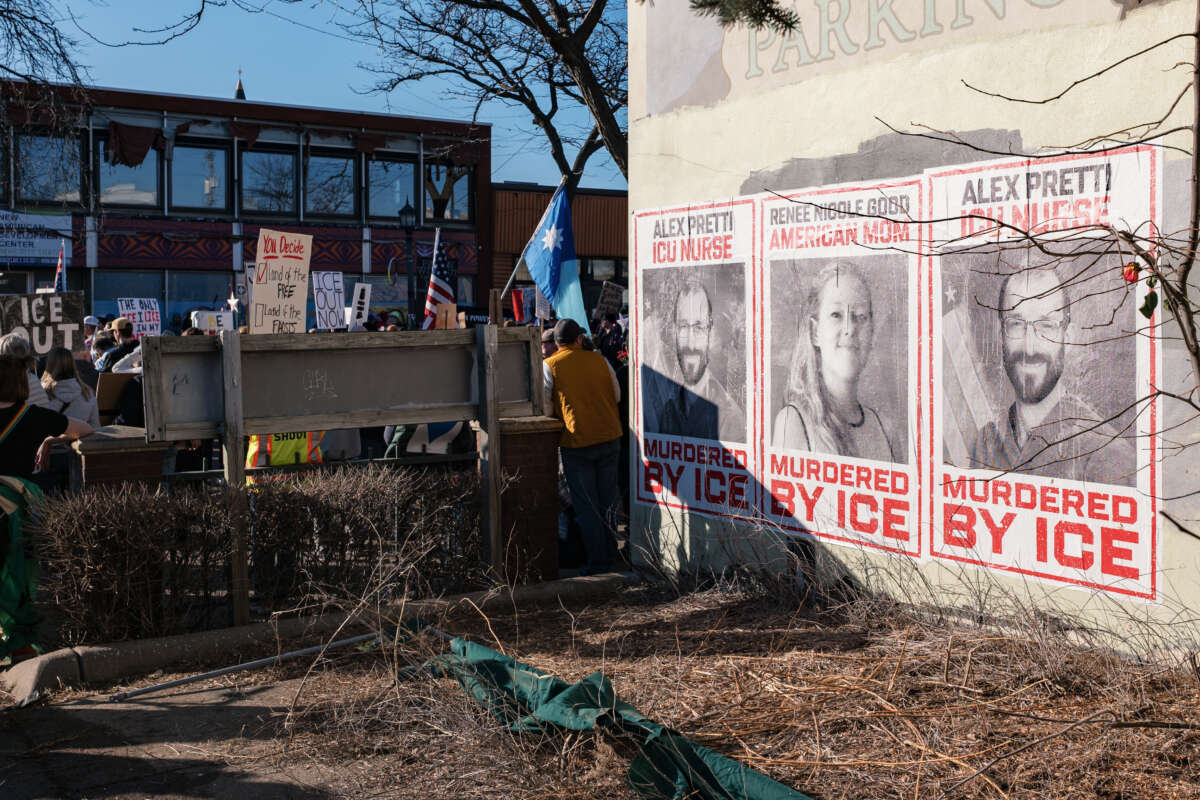
April 1 – Jennifer Peltz and Jake Offenhartz @ AP: Death of a refugee left at a Buffalo doughnut shop by Border Patrol is ruled a homicide - January 24: Alex Pretti
- January 14: Heber Sanchaz Dominguez
- January 14: Victor Manuel Diaz
- January 9: Parady La
- January 7: Renée Good
- January 6: Luis Beltran Yanez-Cruz
- January 5: Luis Gustavo Nunez Caceres
- January 3: Geraldo Lunas Campos
- December 31, 2025: Keith Porter
Suffering Under President Obama
NACDL Criminal Case Tracker
Texas Tribune: A Walk for Peace: photos of Fort Worth monks’ journey to Washington
Walk for Peace – Dhammacetiya – The Ancient Sacred Buddhist Scripture Stupas
Margaret Chase Smith: Declaration of Conscience
NPR: January 6, 2021: A visual archive
Accountability Initiative ICE List
GriftMatrix
Trump Action Tracker
Timeline: Tracking the Trump Justice Department’s Anti-Voting Shift
Tracking the Lawsuits Against Trump’s Agenda
Trump Pardons Database
Project 2025 Tracker
DOGE Tracker
ProPublica: Elon Musk’s Demolition Crew
Wired: 6 Tools for Tracking the Trump Administration’s Attacks on Civil Liberties